



















By now, most people know the many factors that age our skin: sun damage and smoking to name two biggies.And while wearing sunscreen every day and ditching the ciggies will do wonders for your complexion, the biggest beauty thief and ager of all is the stress our minds try to endure day in and day out.You probably know how to care for your skin on its surface, but it’s so important to remember that for your healthiest, most vibrant skin, you must nurture it from the inside out. Enter the seven healthy habits for great skin. These are habits that you form to support radiant physical beauty.All of them will help you to combat the stress that can age you six years or more.
QUIZ: How healthy is your skin?
It’s true that the best things in life are free. You don’t need a million bucks to feel (and look!) like a million bucks. There is so much you can do without spending an exorbitant amount of money, or time. In fact, a lot of what you can do right away costs close to nothing, including adopting these habits, some of which can create new neuronal pathways in your body.The brain is not hardwired as much as we previously thought. And neither is your skin. The moment you decide to adapt these ideas to your life is the moment you begin to make physical, neurochemical, and hormonal changes in your body for the better—ones that will support your goal of bringing out the best in your looks.The good news is that most of these habits involve doing less, not more, than you usually do!
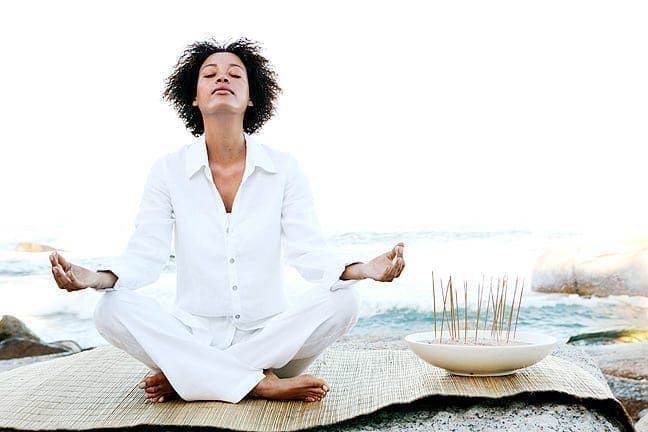
1. Practice deep breathing
A classic sign of the stress response is shallow, crazy-fast breathing. That’s why the opposite—deep, slow breathing—is such an effective way to calm yourself down. It can help you halt a stress reaction, or at least control it. Plus, it shifts the body’s balance of carbon dioxide to oxygen in favor of energizing oxygen. (The integrity of the brain, nerves, glands and internal organs depends on oxygen, and in any shortage in supply will have a profound impact on the entire body, both inside and out.)
MORE: The science of stress and beauty
Breathing goes far beyond just delivering life-sustaining oxygen to the body. Slow, controlled breathing in particular is the foundation for many Eastern practices that aim to return the body to a more balanced state, and one that has removed all signs of stress. When you’re focusing on your breathing, you’re not thinking about anything else. That shift in your mind helps remove stressors, bringing you to a deeper level of consciousness, a place where you can out things into perspective.
2. Get active
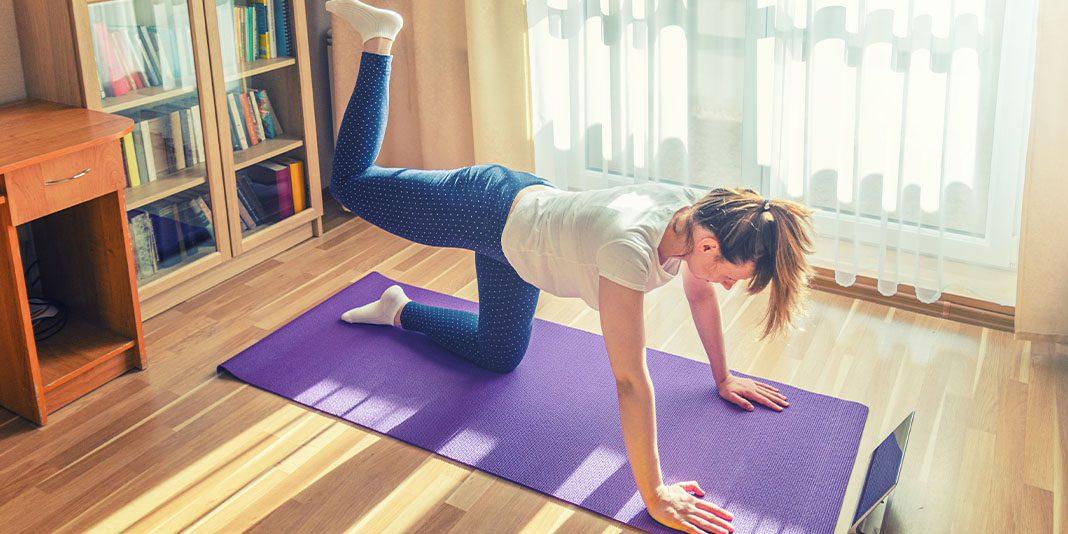
The stress response preps your body to leap into action. But most of the time you need to stay calm. Exercise releases all the revved-up energy inside you so you actually can stay calm. Additionally, it boosts the activity of white blood cells, increasing levels of beta-endorphins, improving your mood and circulation, which is good for your skin. Beta-endorphins have immense anti-inflammatory benefits that fight your stress hormone cortisol.If there is one magic bullet for enhancing the quality of your looks, and your life in general, it’s exercise. The science is well documented: exercise fights the onset of age-related disease, lifts your spirits and sense of well-being, increases your lung capacity so you can take in more oxygen, boost circulation to deliver nutrients to cells and skin, lowers inflammation, and, for many, is the ultimate stress reducer. That healthy glow you get after a great workout (rosy cheeks indicative of the increased circulation that is nourishing all of those facial cells and tissues) isn’t just for show.
MORE: Fitness basics – the “must dos”
3. Beat the foods that beat you
Stress makes most people hungry. When stress hits, cortisol tells our brains that we are hungry, so we seek out a meal. Unfortunately, cortisol’s message to the brain also says that we want to eat sugary, fatty foods—all of the wrong food for stopping the cycle. Rich, sugary foods don’t do much for us besides contribute to insulin swings, poor blood-sugar balance, as well as extra pounds and worse moods. What’s more, the usual culprits—ice cream, cookies, etc.—register in the brains reward center making us crave them even more.The following two strategies will reduce the magnetic pull of these foods. One, eat lots of lean protein—this will give you more energy and fight hunger pangs, which can play games with your mood. Protein is key to mood stability, due to its effect on maintaining a healthy blood-sugar balance, which in turn keeps certain hormones like insulin in check. Two, write down the top five guilty treats you tend to reach for when you’re stressed. Then, don’t eliminate them entirely. However, when you do succumb, eat only half of what you normally would. (Or less: sometimes a bite or two will satisfy you.)
4. Focus on the good things
If you feel buoyant and upbeat, you’re far less likely to start clenching your jaw. Here’s an easy way to raise your happiness quotient at home, as first recommended by Martin Seligman, Ph.D., the scientist who inspired psychologists to investigate happiness and positive emotions.Find a notebook or journal you particularly like. Every night, write down three things that went well that day and why. It also may help to keep a gratitude list—things for which you are truly grateful. The point is to focus on the positive—on the events, people and experiences that you appreciate and that bring you joy. The exercise may even inspire you to turn a negative into a positive just by reshaping your attitude.
MORE: How to Express Gratitude
When you’re stressed, it’s easy to get caught up in thinking about what you’re doing wrong. It’s also very easy for the mind to exaggerate and distort the magnitude and significance of bad things that happen and the speed with which you need to remedy them.Transforming negative thoughts takes practice. You can start by keeping a journal that records the good things that happen. It will shift the focus to what you’re doing right, and that can put a brake on the stressful, negative chatter that often goes on in your head.
MORE: 4 Questions to Ask Yourself About Stress and Anxiety
5. Stretch out your sleep
Sleep is free cosmetic medicine. When people ask me what’s the one thing that will make the biggest improvement in how a stressed-out person looks, I say sleep. Nothing exacerbates stress and a haggard appearance like exhaustion. As you may be able to attest from experience, sleep deprivation can make you cranky, depressed and negative. It can make you overeat, over-caffeinated, and cause you to ditch workouts because you’re too tired.Just about every system in the body (including your inner-beautification capabilities) is affected by the quality and amount of sleep you get each night!
QUIZ: How’s your sleep quality?
6. Take a time out
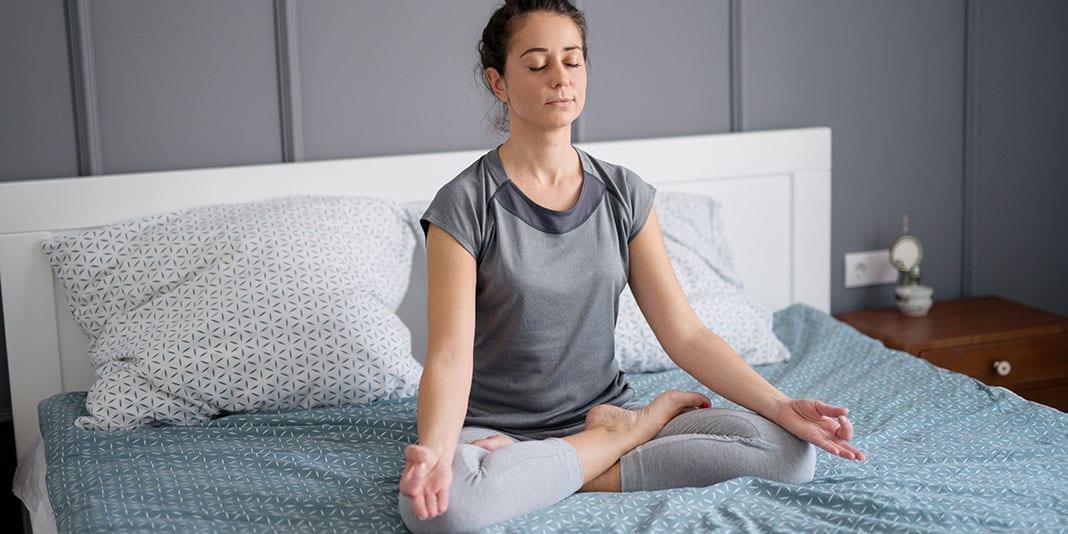
For most people, life is so hyperscheduled, speedy, and “on” that we never do absolutely nothing. It’s rare to set aside time just to be—no agenda, no demands, no plans. Find a comfortable, quiet spot to sit for ten to fifteen minutes every day, stop all of your hustling and bustling…and simply, by yourself, be still. Slowing down in this way, if you do it every day, helps create a sense of spaciousness in your life, a break in the old routine that can open the door to new perceptions, new solutions to old problems, new possibilities. It gives your brain, your psyche, your whole being a break.
MORE: Easy tips to start meditating
7. Cuddle or have sex
Sex makes us happy, and great sex in a loving, intimate relationship makes us happier. Soft, healthy skin is quite sexy on its own. But there is lots more than that going on here. For starters, sex is one of the world’s best stress releasers, which means it doubles as a terrific skin treatment.
MORE: Eight ways sex makes you beautiful
When you’re making love, all kinds of age-defying, beauty promoting events happen as three seductive hormones spill out of the brain: Beta-endorphine, a natural opiate that contributes to the high you feel, Prolactin, a chemical messenger that gives you the relaxing, tension-zapping, post-coital “ahhhhh” and Oxytocin that promotes feelings of affection and triggers that nurturing instinct. All three hormones are released during orgasm and the net effect is satisfaction and contentment.
MORE: All the ways women have mind-blowing sex
And it’s no surprise that your relaxed state of mind and body allows you to fall asleep rather quickly. Getting all sweaty has direct skin pluses, too, as it bathes your whole body in skin-softening oils, giving you that postcoitus afterglow.