






























Gone are the days when we slathered on tanning oil, set up shop on a beach chair, and baked to a crisp in the hot summer sun.Now we know how important it is to stay protected from the sun’s rays—UV exposure is responsible for up to 90 percent of the visible signs of aging, The Skin Cancer Foundation in NYC reports.Problem is, it’s not as easy as grabbing a tube of sunscreen from the drugstore shelf and calling it a day. With so many different levels of SPFs and active ingredients, choosing a sunscreen can be confusing as heck. We’re here to take the mystery out of sunscreen, and help you learn which sunscreen will keep you protected and gorgeous.
Fact #1: There are different types of sunscreens—and it might take some experimenting to find the one that’s best for you.
Dermatologists divide sunscreens into two different categories: physical and chemical. “Physical sunscreens sit on top of the skin’s surface and work by deflecting UV rays. Chemical sunscreens sink into skin’s top layer, and actually absorb UV rays,” explains Eric Schweiger, M.D., founder of Schweiger Dermatology in New York.The most common ingredients in physical sunscreens are zinc oxide and titanium dioxide. When it comes to chemical sunscreens, there’s a much wider range of ingredients. Some of the most common include avobenzone, oxybenzone and ecamsule (better known by its trade name, Mexoryl).
So is either physical or chemical sunscreen superior to the other? When it comes to protection, zinc oxide is the hands-down winner. It blocks the entire UV spectrum all by itself. Titanium dioxide is in second place, and both are ideal for sensitive skin. “They tend to be less irritating,” explains Dr. Schwieger. Physical sunscreens are also a better pick if you need to head outside immediately. “They work immediately to reflect UV light, unlike chemical sunscreens, which need to be absorbed for 30 minutes before they work effectively,” says Arielle Kauvar, M.D., founding director of New York Laser and Skincare.The drawback? Physical sunscreens have a bad reputation for thick formulas that leave a white film on the skin. But recent technology has allowed for companies to create physical sunscreens that are lightweight and sheer.
Two good physical sunscreens to try:
Pratima Neem Rose Sunscreen SPF 30, $18MD Solar Sciences Mineral Screen Gel SPF 30+, $30
“Most sunscreens are a combination of at least two or three active ingredients, often a mixture of physical and chemical,” says Dr. Kauvar. Chemical sunscreens are always invisible on the skin, so many people prefer 100 percent chemical formulas. The “best” sunscreen is the one you’ll wear every day, so if this is what you prefer, then go for it.
Two good chemical sunscreens to try:Aveeno Positively Ageless Youth Perfecting Moisturizer with SPF 30, $11Neutrogena Ultra Sheer Dry-Touch Sunblock SPF 55, $9Finding the best sunscreen for acne-prone skin…we wish there was an easy answer, but we know from personal experience there isn’t one. Look for a light lotion or gel formulation (as opposed to a heavy cream) and be prepared to test out a few different formulations to find one that works for your skin.
Fact #2: Your sunscreen must protect you from both UVA and UVB rays.
Before you say “huh?” let us explain. The sun’s rays reach the earth in different wavelengths: UVA (the longer wavelengths on the UV spectrum, ranging from 320–400 nanometers) and UVB (the shorter wavelengths, ranging from 290–320 nanometers). Both types affect your skin differently. UVB rays are primarily responsible for sunburns, while UVA rays are primarily responsible for skin aging. “UVA rays penetrate the skin more deeply, causing wrinkling, leathering, sagging and brown spots,” says Dr. Kauvar. Both types of rays contribute to skin cancer, so it’s crucial that your sunscreen protect against both.
Now, here’s the catch—the SPF (sun protection factor) number on a sunscreen only refers to a sunscreen’s UVB protective capacity, not UVA. Even if a sunscreen claims to provide “broad spectrum,” it might not necessarily be true. “Unfortunately, the terms ‘broad spectrum’ and ‘UVA protection’ have no official meaning, and can be used even if the product covers a small part of the UVA spectrum,” says Dr. Kauvar.
DISCUSS: Is SPF in makeup enough? So how do you know if a sunscreen offers effective UVA protection? You have to do it the old fashioned way: Check the active ingredients list on the back of the bottle. “Some combination of the following five ingredients must be included: avobenzone, titanium dioxide, ecamsule (Mexoryl), oxybenzone and zinc oxide,” says Dr. Kauvar. The only time a single ingredient is effective is in the case of zinc oxide. “Zinc oxide effectively blocks all parts of the UV spectrum,” confirms Dr. Kauvar.
Fact #3: Higher SPFs can be beneficial, but that doesn’t mean you’re off the hook from reapplying.
Used to be, you were hard-pressed to find anything above an SPF 30. Now, sunscreens come in SPFs all the way to up 100. Do they really make a difference? Turns out, they can. To understand why, though, you first have to understand exactly what SPF really means:
“SPF is a measure of the amount of time you can stay in the sun before getting sunburned from UVB exposure,” explains Dr. Schweiger. For example, if you normally start to redden or burn after five minutes in the sun, wearing an SPF 30 means it will now take you 150 minutes (5 minutes x 30 SPF) to burn. This sounds great in theory, but the reality is a different story:
“In reality, sunscreens are applied too thinly, they get sweated off, and they break down over time, so they never give you quite the protection they’re supposed to,” says Dr. Schweiger.Starting with a higher SPF can be beneficial since you’ll have a higher level of protection from the outset, but remember—that doesn’t mean you get a free ride as far as re-applying. “Every sunscreen loses its effectiveness over the day,” says Dr. Kauvar. “Reapplication is just as important as putting it on in the first place.” The rule of thumb: Reapply every two hours, and always reapply after sweating or swimming.
MORE: 6 Ways to Outsmart the Sun
Fact #4: When it comes to sunscreen, antioxidants are your best friend.
Some research indicates that as chemical sunscreens break down, they can increase the amount of free radical activity on your skin—however, the evidence is inconclusive. “The study that examined this question was performed on engineered skin tissue, and tested individual ingredients rather than sunscreen products, so specific conclusions can’t be drawn,” explains Dr. Kauvar.
Still, it’s better to be safe than sorry—all the dermatologists we talked to recommended choosing a sunscreen that’s fortified with antioxidants over one that’s not. The best antioxidant ingredients to look for: Vitamin E (alpha tocopherol) and vitamin C (L-ascorbic acid). “Vitamin C has been shown to help combat free radicals and boosts immunity of skin cancer fighting cells,” says New York City dermatologist Francesa Fusco, M.D.
If your sunscreen doesn’t include either of these beneficial ingredients (or even if it does), think about layering an antioxidant serum underneath for extra anti-aging power. “Green tea polyphenols are the most stable, and one study showed they protect against sunburn,” explains Dr. Amy Wechsler, YouBeauty Dermatology Advisor.
A green tea serum to try:Topix Replenix Serum CF, $52
Fact #5: Don’t skimp!
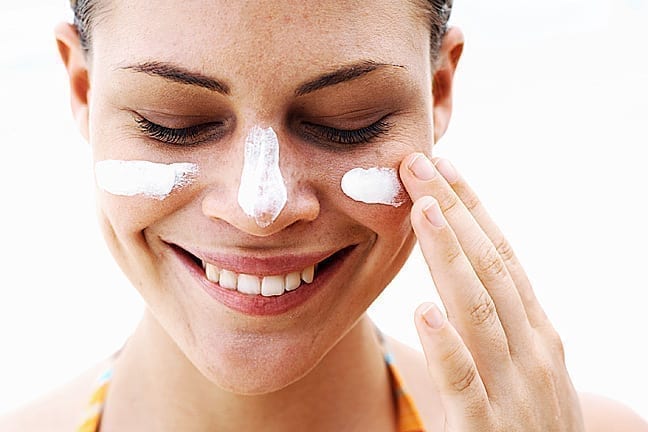
If you’ve been carting the same tube of sunscreen in your beach bag since last summer, we have news for you: You’re not applying nearly enough to get the SPF protection level listed on the tube. “To ensure you get the full SPF of a sunscreen, you need to apply 1 oz.—about a shot glass full,” says Dr. Kauvar. “Studies show that most people only apply one-half to one-quarter of that amount, which means the SPF they’re actually getting is lower than advertised.”
Think of it this way: If you have an 8 oz. tube of sunscreen, that’s eight applications. That tube should last you two or three trips to the beach, max—not the whole summer, and certainly not two summers in a row!
Fact #6: Reapply, reapply, reapply!
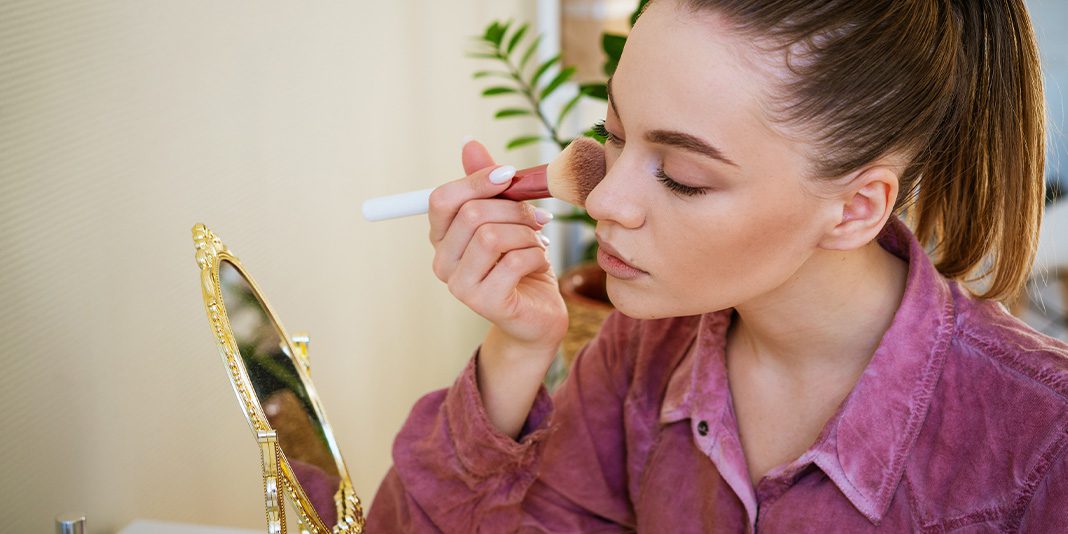
Okay, so we already mentioned this in Fact #3—but it bears repeating. No sunscreen in the world is going to keep you protected unless you’re diligent about reapplying every two hours. It can be tricky during the workday (who wants to slather additional sunscreen on top of their makeup?) but there are ways to get the protection you need without disturbing your foundation and concealer. Brush-on powder sunscreens can be swiped on right over your makeup to help boost your SPF before you head out for your lunch break.
A powder sunscreen to try:
Chantecaille Protection Naturelle SPF 46, $70Looking for something a little stronger?
Try: Chantecaille Ultra Sun Protection SPF 50, $80
MORE: Natural Sunscreens: More Pros Than ConsFor more ideas, check out these 27 skin-saving sunscreens.