
































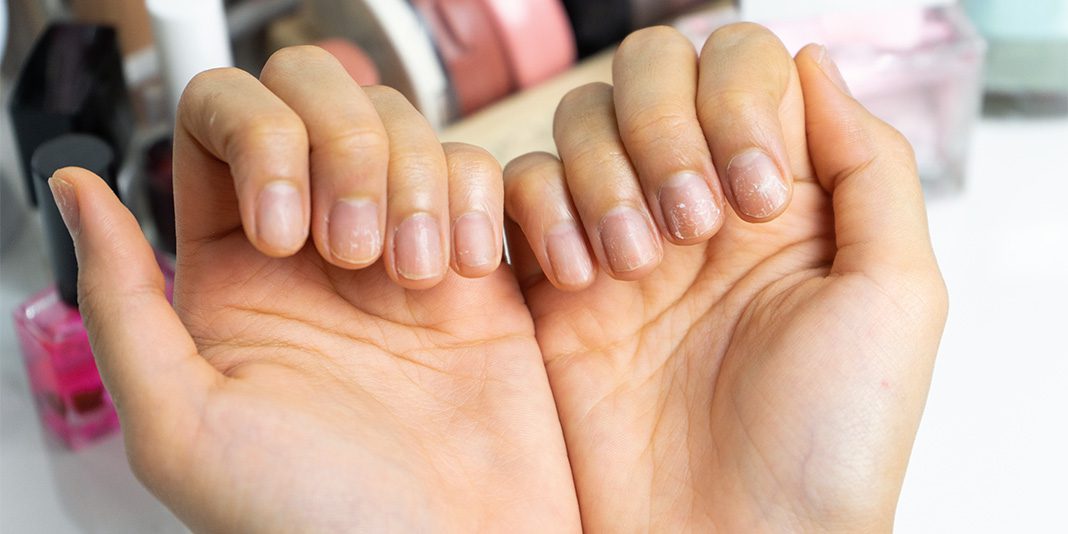


The Scientist: Dana Stern, M.D. is a New York-based dermatologist who specializes in the treatment of nail disorders and a member of The Council for Nail Disorders.The Answer: Let’s start by putting an old wives’ tale to rest. White marks on your nails don’t mean you have a calcium deficiency. Those random, scattered white patches are called punctate leukonychia and they’re most often caused by something physical, such as an overly vigorous manicure, biting your nails, or banging your hand. The tiny traumas typically start at the nail matrix—that half-moon the nail grows out of—and move upward as the nail lengthens until, eventually, you trim or file them off.An aggressive mani, especially if it involves cleaning under the nail with a wooden stick, can also cause onycholysis, in which the nail begins to separate from the underlying nail bed. The white tip of the nail broadens and lifts, like prying open a can. The warm, moist space underneath is inviting to yeast and bacteria, which can get in and colonize (nail-techs call that “The Greenies”—ew!).As a general rule, go easy with the filing, buffing and clipping—and quit cutting your cuticles! They’re your nails’ natural protective seal against water and pathogens. (If you really can’t stand them, gently push them back with a washcloth after a shower.)If you notice parallel vertical ridges running from the nail bed to the tip of your nail, you’re probably seeing onychorrhexis, which is natural, very common and usually nothing to worry about. As we age, our nails become more brittle, which can create this texturizing effect. It’s unavoidable and there isn’t any effective treatment, but only in rare cases is onychorrhexis more than a cosmetic issue. If ridges appear suddenly it could be an indication of an inflammatory condition.The appearance of your nails offers insight into your broader health. If there’s any sudden change in your nails, see a dermatologist. Concave, flat or spoon-shaped nails might be a sign of anemia. A longitudinal black or brown band or pigmented stripe may indicate a melanoma underneath, in the nail bed. Don’t just polish over it. Consult your doctor right away.MORE ON NAILS FROM YOUBEAUTY.COMThe Anatomy of Your NailsCommon Finger- and Toenail IssuesIs Your Salon a Hotbed of Disease?

Ask a Scientist: My Nails Look Weird-Should I Be Worried?
LATEST